Our Publications
Briefing note – EurEau update on the 3Ts
In 2011, a manual and a short guide to the 3Ts was published. This briefing Note updates the existing paper on the 3Ts and provides a snapshot of the way the 3Ts were implemented among EurEau members in 2017.
Directive for the Reduction of the Impact of Certain Plastic Products on the Environment
EurEau supports the proposal of the European Commission to reduce the environmental impact of single-use plastics (SUP). Producers must be held economically responsible for the substantial economic damage wet wipes cause to the waste water infrastructure.
Drinking Water Directive
We support the underlining philosophy of the Drinking Water Directive to ensure the protection of public health and we uphold the goals the European Commission intends to achieve with the new proposal. We believe that European citizens’ trust in tap water needs to be further increased.
However various elements of the European Commission’s proposed text will have to be improved by the co-legislators to make the directive legally sound and implementable in an efficient and effective way.
Post 2027 Scenario – Realising the WFD
The Water Framework Directive (WFD) set out a journey to achieve ‘good status’ for water bodies by 2015. The implementation of the WFD has revealed some issues, especially concerning the way the status of a water body is defined and assessed at Member State level. This position paper aims at describing the shortcomings in the tools for status assessment and the role played by exemptions, with a focus on the implications for water services in Europe. It also suggests possible solutions that could be part of the future revision of the WFD in order to uphold the main goal of the directive: the protection of European water bodies even after 2027.
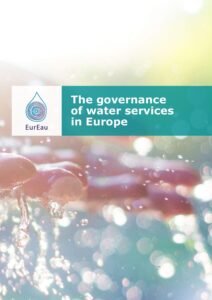
Report on the governance of water services in Europe
If water is a public good, it is also true that providing water services is an activity with important technical, economic, managerial and regulatory aspects – whether carried out by public or private operators. Water services are essential in supporting the sustainable development of our societies, but still little is known about them. This is because the infrastructure is mainly underground, accessible only to few experts and sometimes situated in locations that are far from urban areas and protected for obvious security reasons.
This report will be helpful in providing a simple but comprehensive overview of water governance models in Europe, especially to those decision makers at EU and at national level who will work on the legislative instruments to reform water policy in the coming years.
Europe’s water in figures – a statistical snapshot of drinking and waste water in Europe
EurEau is pleased to present our data survey, covering both drinking and waste water services in Europe. It includes national technical, economic and managerial data ranging from population connection rates to drinking water supply to waste water treatment levels to prices and governance. The results testify the diversity of the sector. They also show some of the immediate challenges our sector is facing, particularly regarding investment needs.
2017 edition.
Customers and cost recovery – Realising the WFD
Customers and citizens need a much greater understanding of the value of water, including water pricing policies and the governance of water services, namely which players are involved, who takes the decisions on how water services are managed and who is responsible for what. Achieving this will help ensure access to safe and sustainable water today and tomorrow.
The Need for Greater EU policy coordination – Realising the WFD
Clean water is a prerequisite for ensuring environmental and public health and prosperity. To achieve this we need better EU policy coordination.
The Economic Challenge of Reduced Water Consumption
Decreasing water consumption is an economic challenge for water and waste water operators, since most of their costs are fixed but their income is closely linked to consumption. Given that 60-80% of the costs are fixed, measures should guarantee that all fixed costs are recovered, for example by a better tariff structure.
Fertiliser Regulation
The Fertiliser Regulation opens the door to using recovered phosphorus from sewage sludge in fertiliser products. Including treated input materials from waste water treatment plants as a component in fertilisers promotes recycling and is better for the environment.